
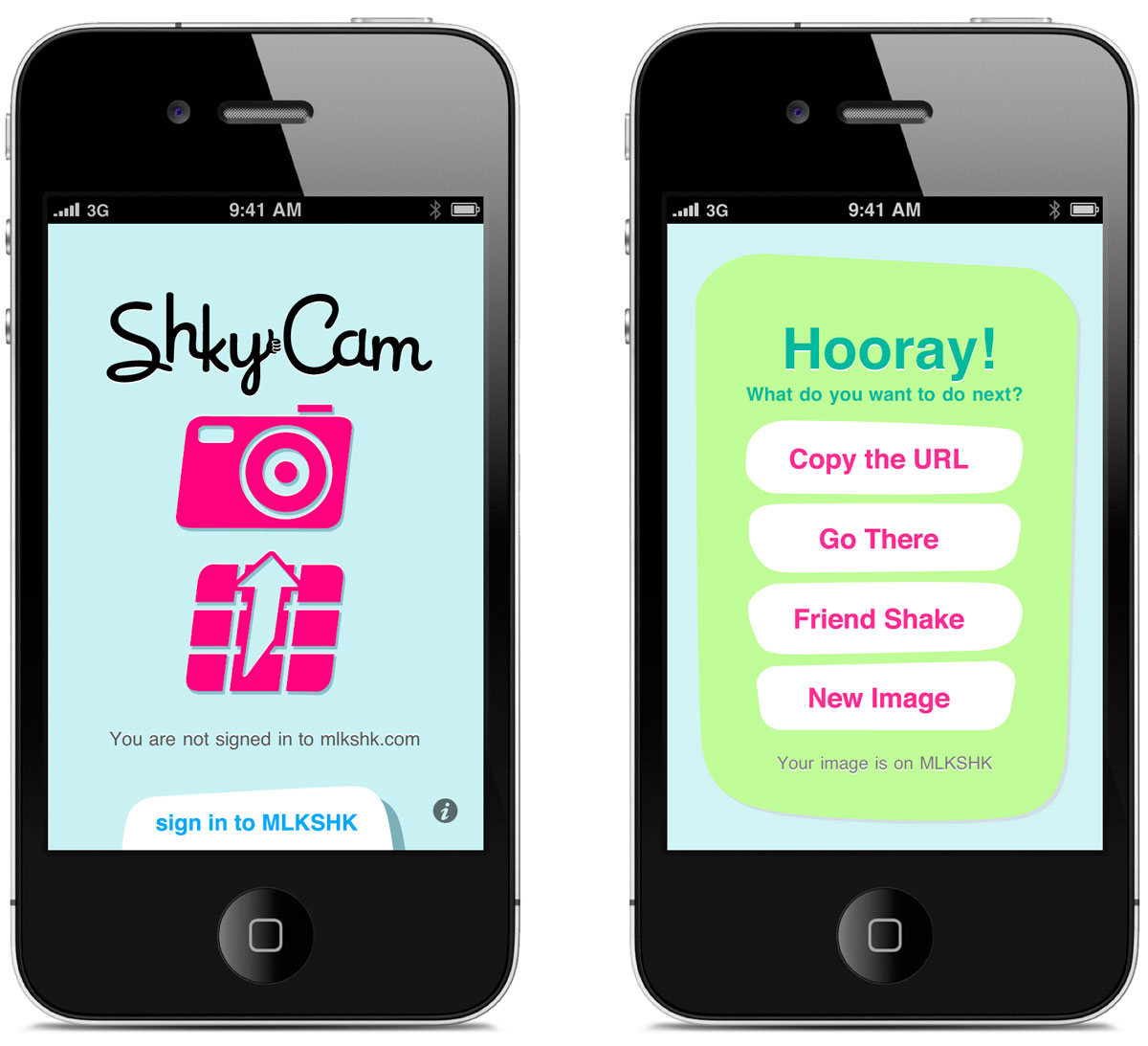
It can be difficult to remember how early 2011 was in the era of smartphones. Just tens of millions of people had iPhones (compared to the 1.5 billion active iPhone users today).
The image sharing site MLKSHK had neither a mobile app nor a mobile-formatted version of its website, in part because 3G networks were still pretty slow for downloading images (Instagram pictures were just 612 x 612 pixels at the time).

MLKSHK was for people who worked on their computers all day (often software developers), delivering a scrolling feed of quick distractions and dopamine hits. No videos, no blog posts, just images, with titles and captions. “The silly ones. The sweet ones. The cool ones. The gross ones.”
Part of what made the site addictive lay in its input method—a browser extension. See a picture you like on the internet, send it to MLKSHK with a simple right-click.
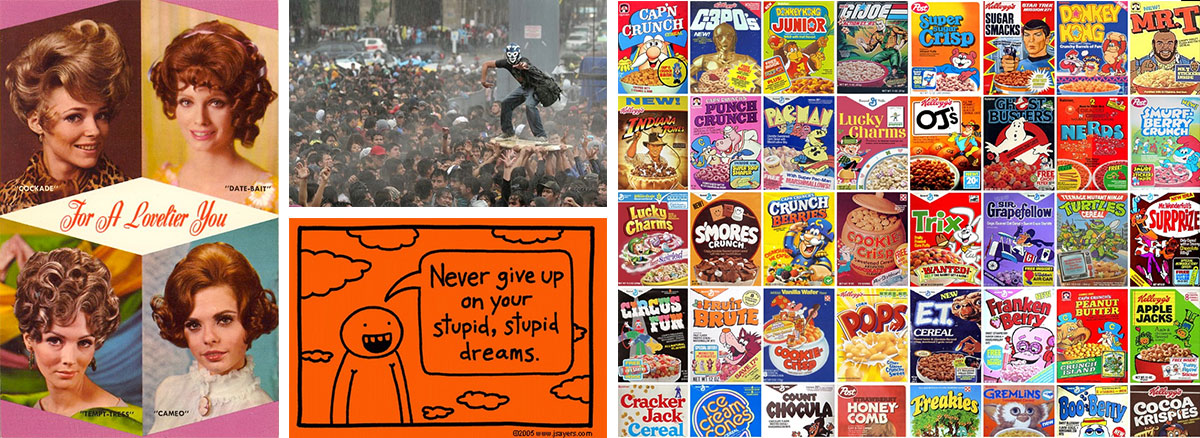
A typical array of images from MLKSHK.
Like a lot of MLKSHK users, I was spending a lot of time on my phone. So amidst my explorations into user interface design, I decided (with the help of MLKSHK’s creators) to develop my first iPhone app, allowing users to post images to MLKSHK on the go.
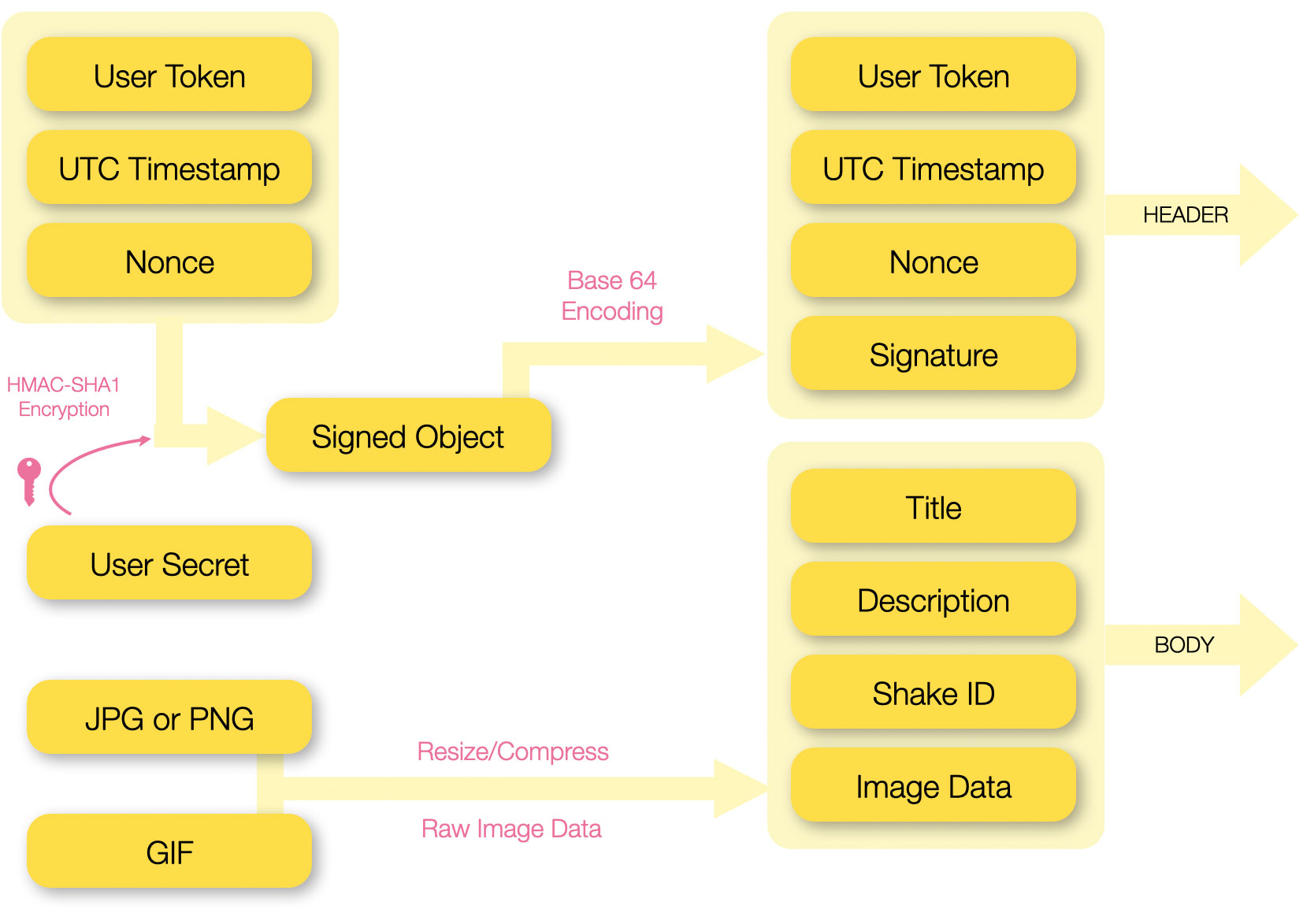
I had never previously made software, so I needed to learn about Xcode, and Objective-C, and JSON, and cryptographic hash functions, and—to authenticate with MLKSHK’s servers—OAuth2.
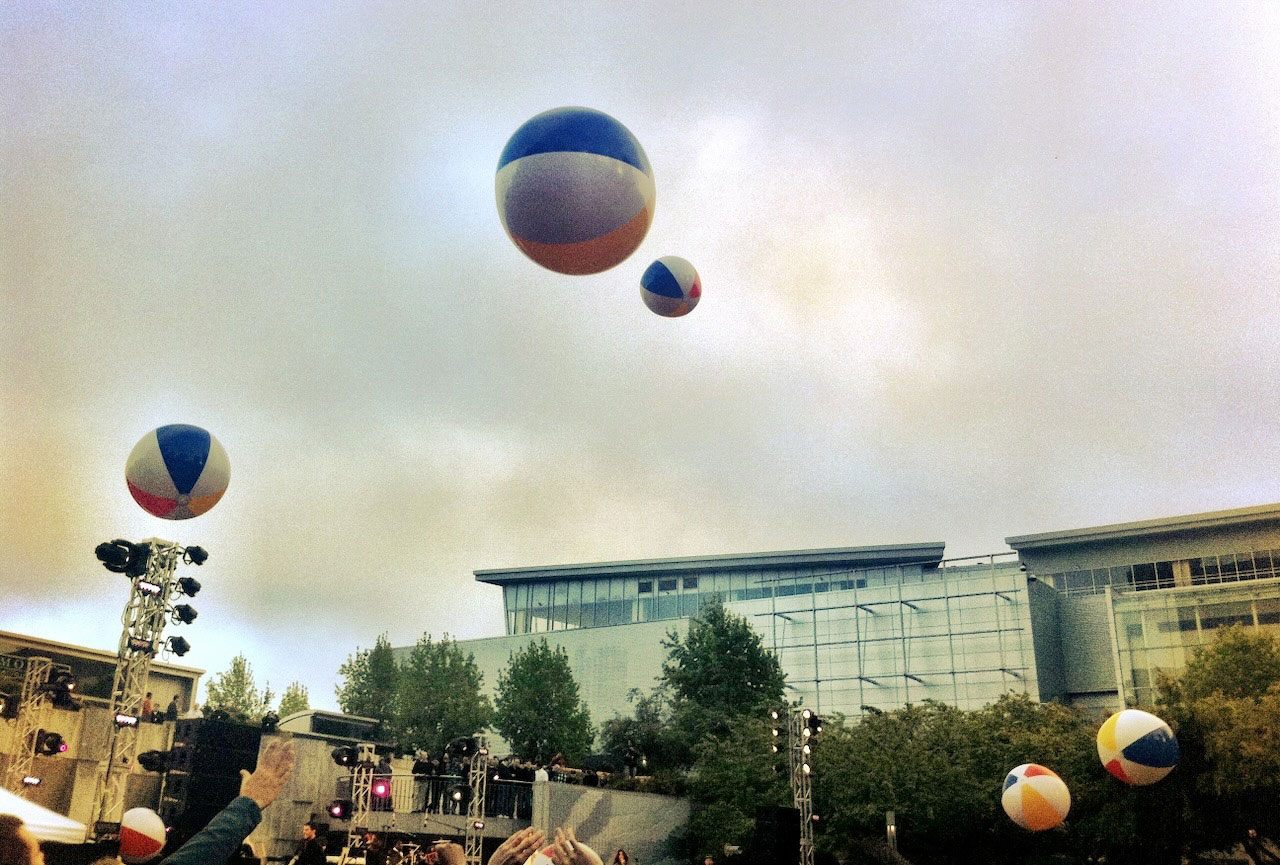
Beach balls flying as Michael Franti & Spearhead played, the year I attended WWDC as a developer.
MLKSHK’s designer Amber Costley had given the site a playful, graphical style employing irregular hand-drawn shapes, which I worked to emulate with ShkyCam’s UI design. (The flat aesthetic predated iOS7’s redesign by a couple of years.)
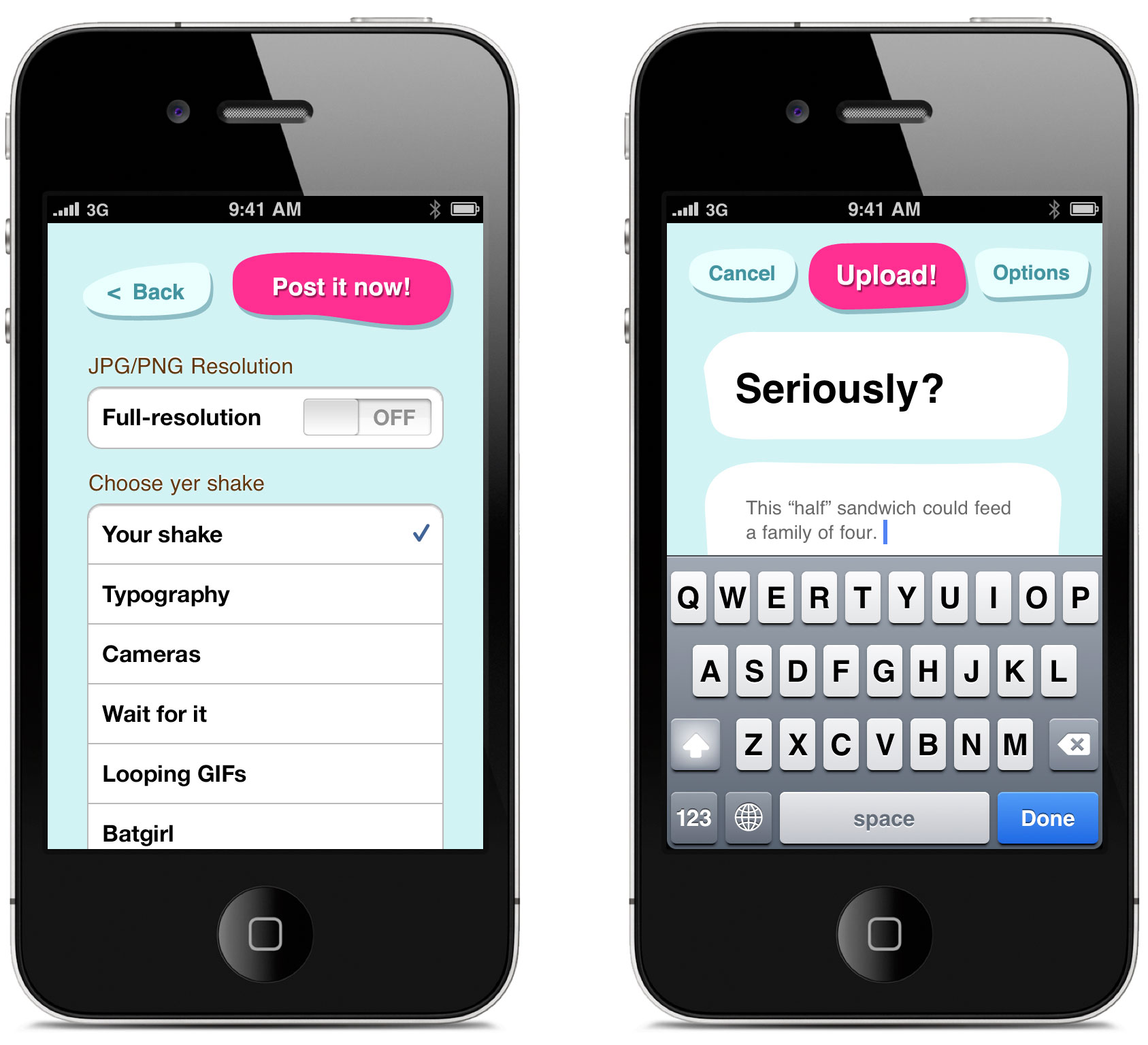
I took inspiration from Amber’s MLKSHK logotype, and echoed the friendly smile with an enthusiastic thumbs up.

GIFs were a popular feature of MLKSHK, but had not yet had their cultural resurgence. GIF was a legacy graphic format, a tacky holdover from the days of the early internet. You could save a GIF to your iPhone’s Photo Library, but you couldn’t get it out again (to post it to MLKSHK). The “share” functionality in iOS could only export as a static JPG or PNG.
I found no one on Stack Overflow who had tried to solve this problem, and the friendly Apple representative I talked to at WWDC didn’t understand why I might want this.
The singular “innovation” of ShkyCam was in uploading the raw image data from the Photo Library to the app (using CGImage) and from there into MLKSHK.
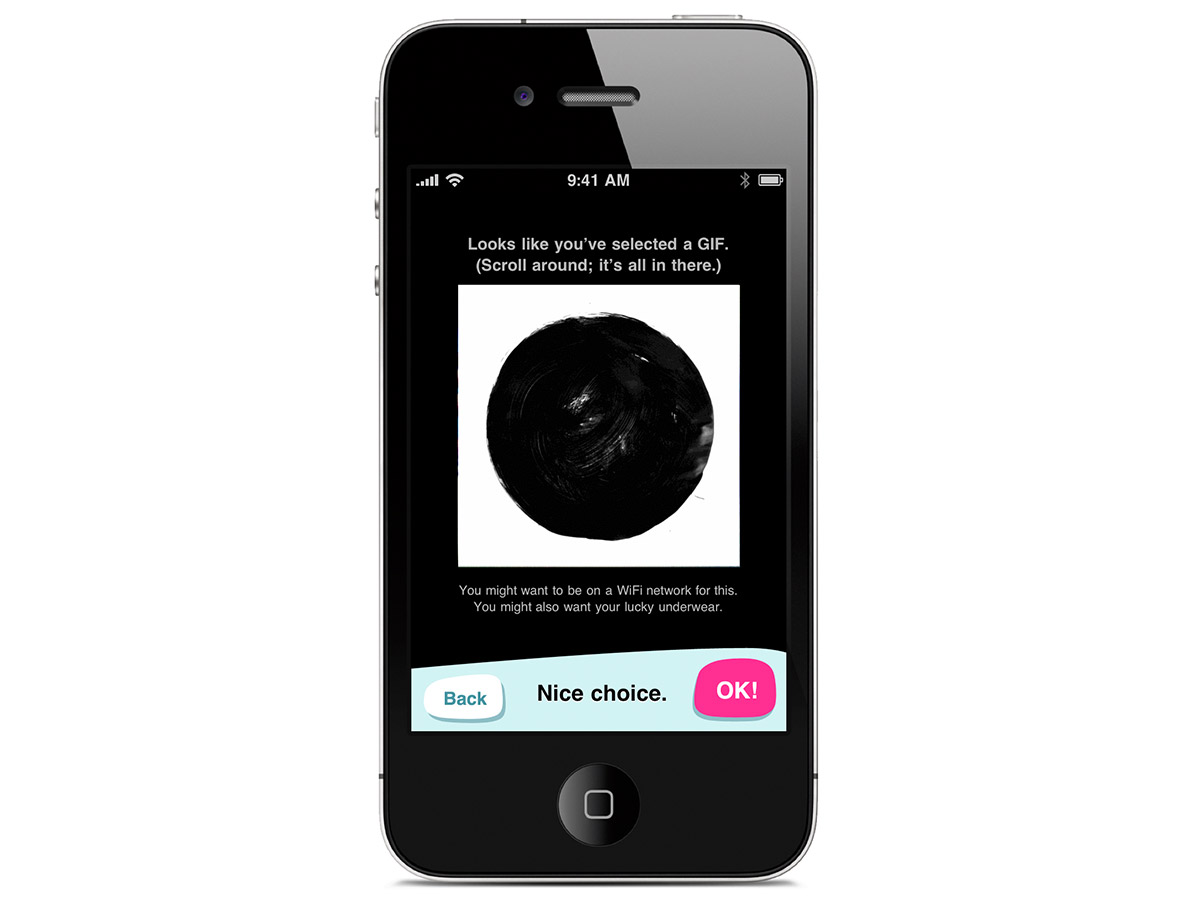
This was my last attempt at being an iOS developer. It had taken a lot, even to make such a simple app. (I relied on the help of Matt Yohe, a “real” developer, to help me manage memory and to get the thing out the door.)
In time MLKSHK shut down, but a successor emerged in the volunteer-run MLTSHP. It might be worth checking out.