
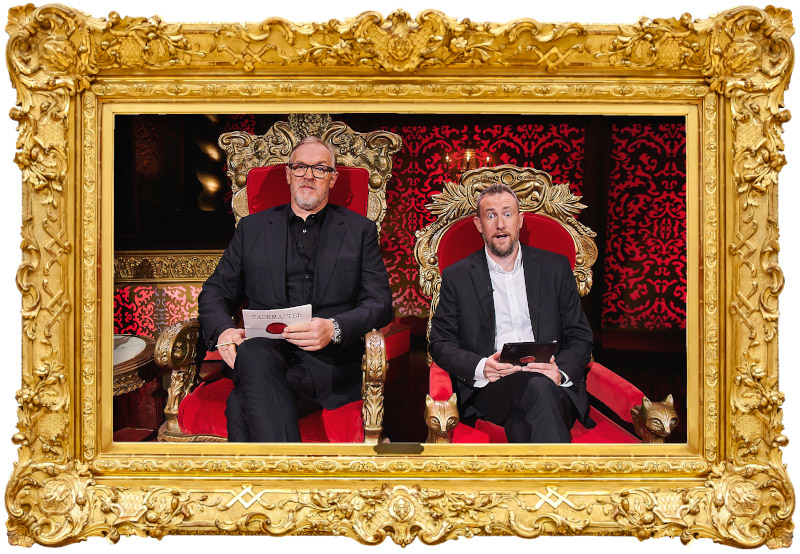
When facing the prospect of selecting from one of more than 20 past series of Taskmaster I suggest to Americans that they start with the fourth season.
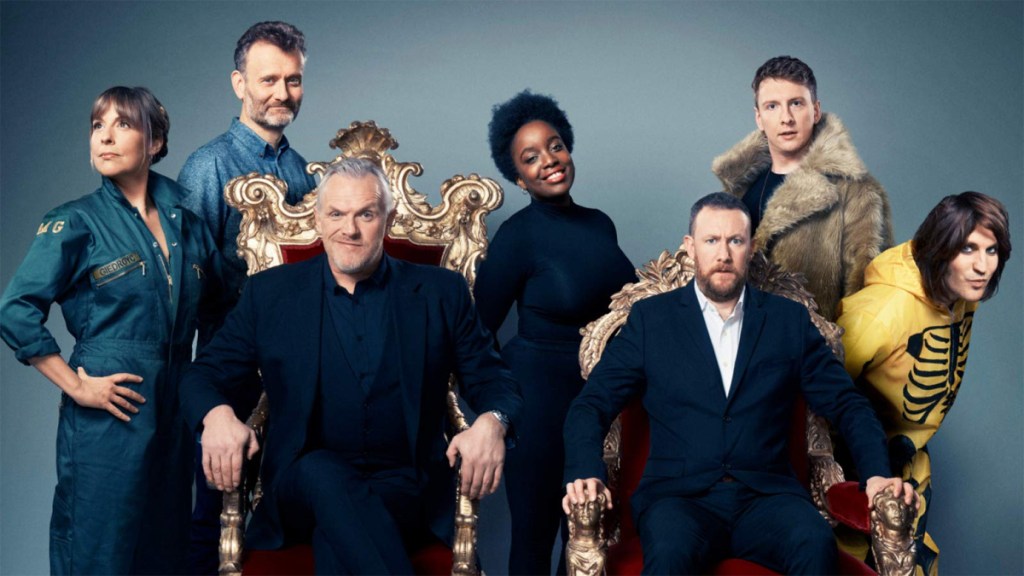
Series 4 lasts just 8 episodes (later seasons have 10), it’s when I think the show found its tone, and it features two faces who will be familiar to Bakeoff viewers (Mel Giedroyc and Noel Fielding).
In each series of Taskmaster, five comedians are filmed separately completing a series of “tasks” over a number of days, mostly situated in and around a small house. Months later the competitors assemble in a studio with a live audience to watch back how they did, and are rewarded (meaningless) points by "Taskmaster” Greg Davies, a faux-pompous judge of their comparative success.
Alex Horne is the “Taskmaster’s Assistant”, who hands out tasks and explains the rules. He is in actuality the show’s creator / executive producer / task designer, playing the assistant because he’s more comfortable performing low status.
The show is beautifully filmed and brilliantly edited, even from its earliest seasons, where the creative team turned constraints (tight budgets, a small crew working in a cramped location) into a distinctive aesthetic and vibe. They shoot and release two seasons each year (which is how there can be so many).
It is also (mostly) family-friendly, attracting enough youth viewers for them to have attempted one season of "Taskmaster Junior".
Some tasks involve physics and problem-solving, like this one from Series 2 featuring three yoga balls. Contestants can be rewarded for thinking outside of the box.
Other tasks are Escape Room-type puzzles. Here's a team task from Series 20 with a fiendishly clever conceit
Finally there are “creative” tasks, where players must navigate constraints to quickly create a painting, sculpture, short film, or this song from Series 5.
After Series 4, I’d suggest Series 11 (from the social distancing era), or Series 19., featuring American Jason Mantzoukas (Dennis Feinstein / Derek! / Adrian Pimento). That’s where I first hopped on.
While later seasons contain easter egg references to earlier series, there is no real order in which they need be watched.
The show’s heart lies at the intersection of comedy, creativity, and neurodiversity. The show works best when each competitor takes a different approach to each task.
There have been a few (diagnosed) autistic competitors over the years, but by asking its players to solve unusual problems in strange circumstances, the show has in some ways also become a kind of neuropsychological exam (in entertainment form). The host of the Taskmaster podcast has shared that several past contestants have gone on to seek actual assessments after doing the show...😉